


Workflow builder for computational biochemistry
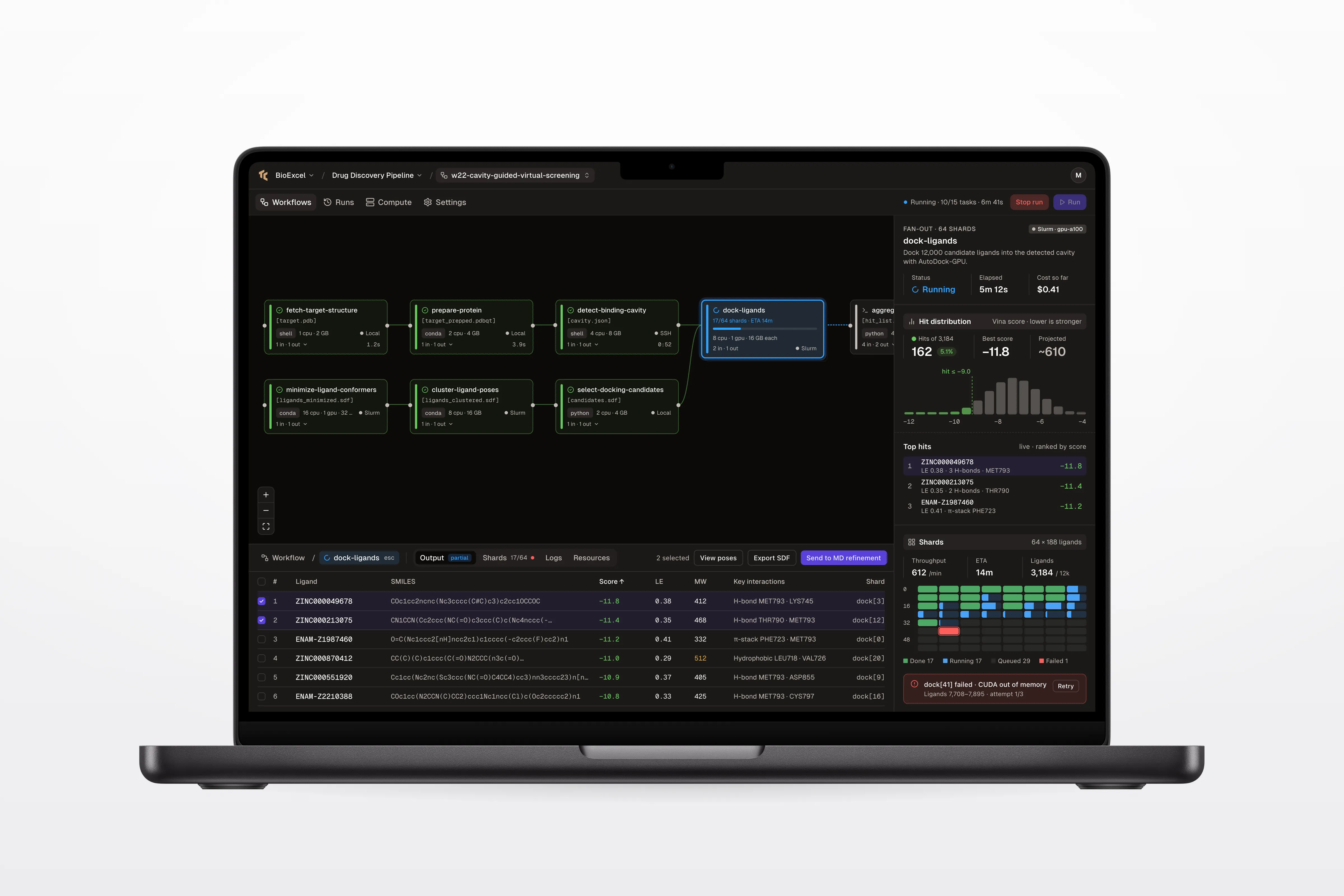
Scientists build and run pipelines on HPC clusters and cloud GPUs themselves.No DevOps team, nothing to install on the cluster.
templecompute.com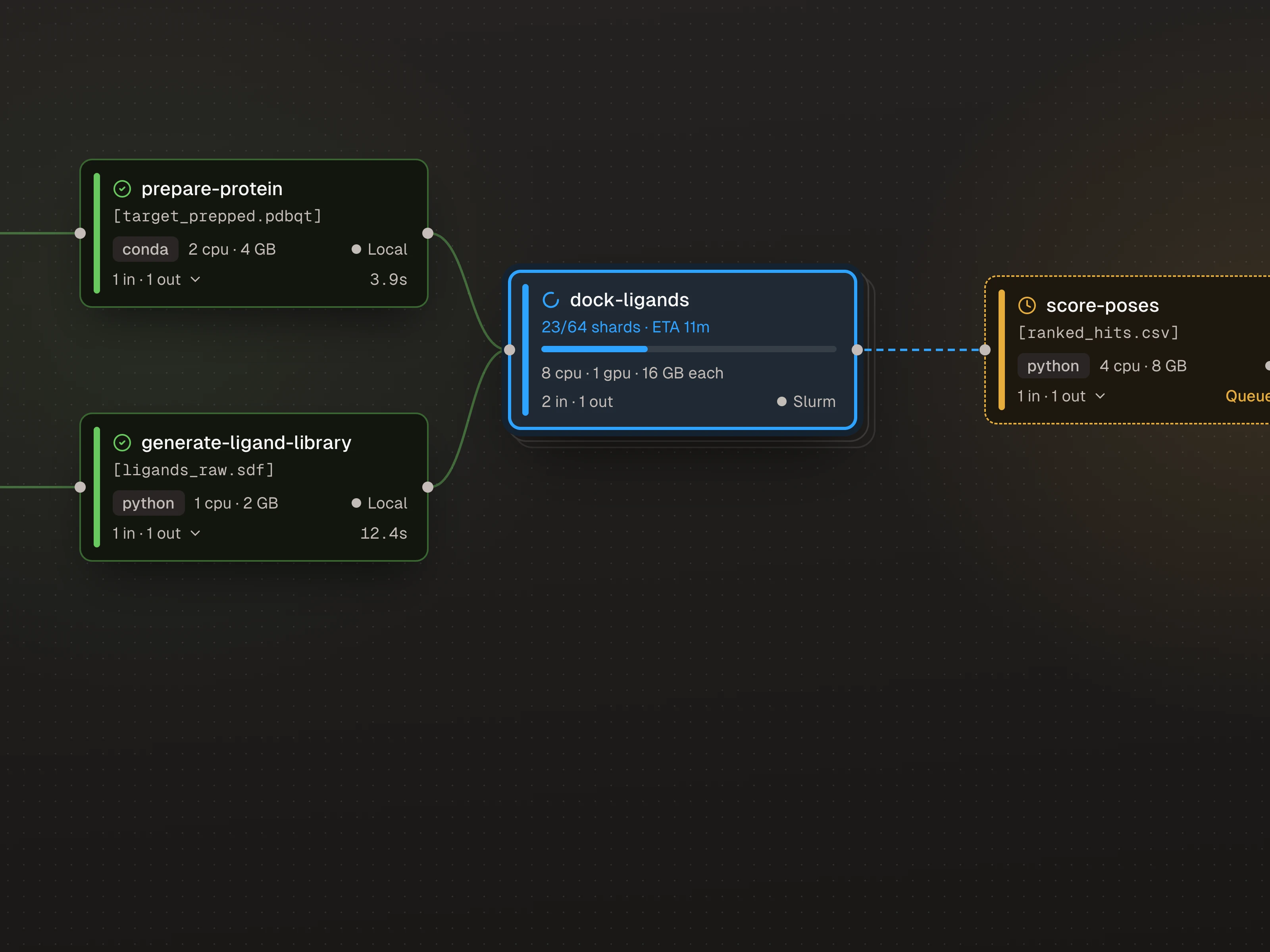
Designing for scientists
Most of the work was understanding the domain. What a ligand is, why docking runs in shards, and what makes a hit worth a second look. Scientists think in molecules and binding scores, not jobs and nodes, so results come first.
Runs
Start from a pipeline
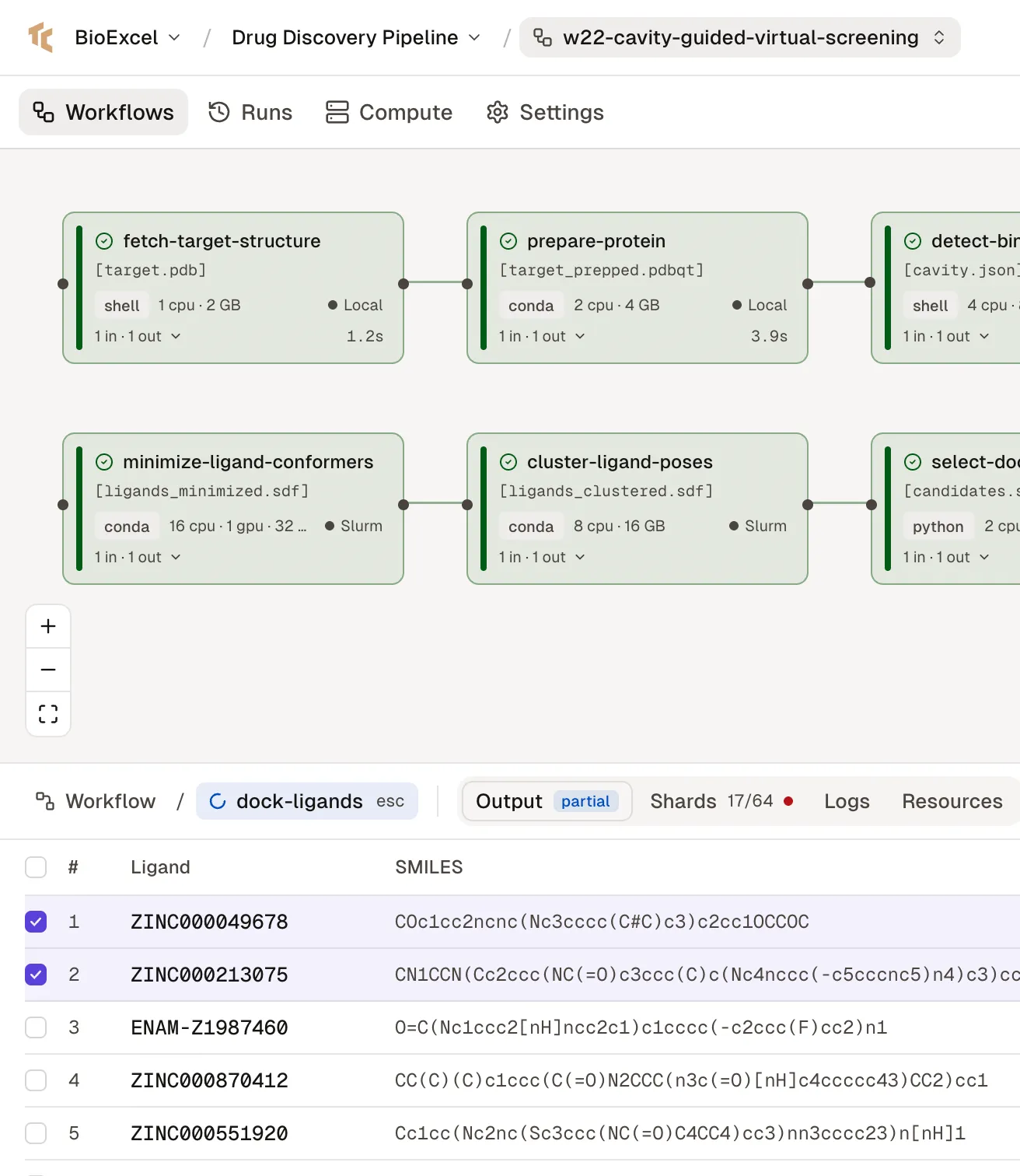
Horus ships with 34 documented pipelines, like AutoDock Vina docking, Boltz-2 screening and GROMACS MD setup. Using one copies it into your workflows to change on the canvas. Any task can be saved as a reusable block, and a published workflow drops into another as a subworkflow.
Trying keys in a lock
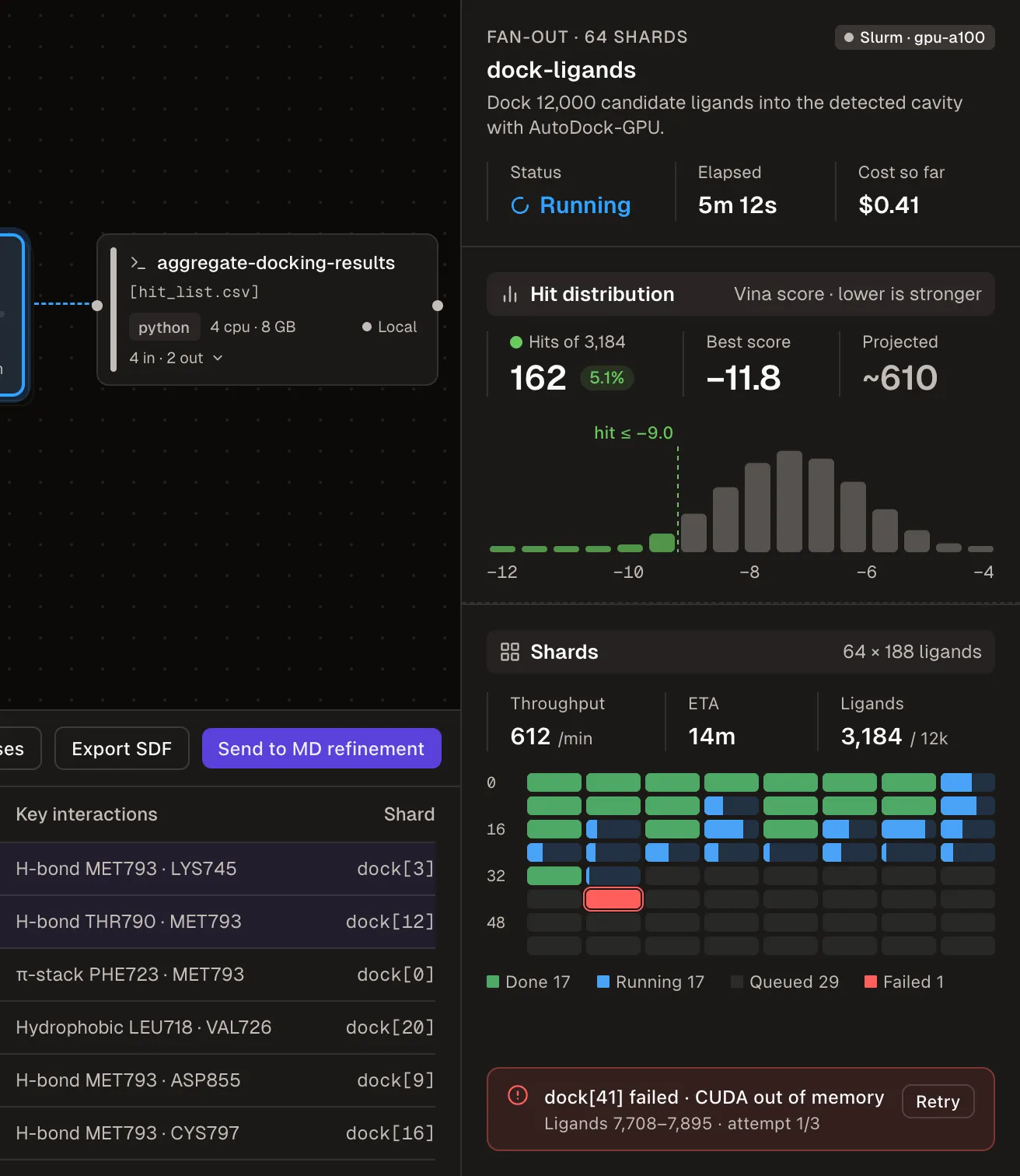
Computational biochemists look for new medicines in simulation, long before the lab. They test thousands of small molecules against a disease protein to see which ones fit, like trying keys in a lock. The math runs for hours across dozens of machines, so Horus runs it on the cluster they already have, and if one piece fails, only that piece reruns.
Engineering lift
- Cloud machines spin up when a run reaches the step that needs them, and shut down when it ends, even on failure or cancel.
- Runs take hours and outlive the browser tab. Task and shard status streams from the backend, so the canvas, tasks table and inspector catch up after a reload.
- The canvas shares the open-source runtime's model. A node is a task, an edge is a typed artifact, and plugins add new targets and task kinds. Horus runtime on GitHub
